NASA
THE MOON
Our natural satellite, 384,400 km from Earth. Everything we know, region by region.
KEY DATA
Earth-Moon Distance
384 400 km
Diameter
3 474 km
Gravity
1,62 m/s² (1/6)
Temperature
-173°C → +127°C
Orbital Period
27,3 j
Age
4,53 Mrd
LUNAR MARIA
The "maria" are ancient basalt plains formed by volcanic eruptions 3-4 billion years ago. They are the dark areas visible to the naked eye.
Mare Tranquillitatis
Sea of Tranquility
Apollo 11 landing site (July 20, 1969). Neil Armstrong and Buzz Aldrin took the first human steps on the Moon here.
8.5°N, 31.4°E
Mare Serenitatis
Sea of Serenity
Apollo 17 landing site (1972). Last crewed mission to the Moon, with geologist Harrison Schmitt.
28°N, 17.5°E
Oceanus Procellarum
Ocean of Storms
The largest lunar mare. Landing site for Apollo 12 and China's Chang'e 5 (2020) which returned samples to Earth.
18.4°N, 57.4°W
Mare Imbrium
Sea of Rains
Second largest mare, formed by a giant impact 3.9 billion years ago. Apollo 15 landing site.
32.8°N, 15.6°W
Mare Crisium
Sea of Crises
An isolated mare visible to the naked eye. The Soviet Luna 24 probe collected samples here in 1976.
17.0°N, 59.1°E
Mare Nectaris
Sea of Nectar
A small mare formed about 3.9 billion years ago. Surrounded by very ancient terrain rich in anorthosite.
15.2°S, 35.5°E
CRATERS
The Moon is covered in impact craters — traces of billions of years of cosmic bombardment.
Tycho
⌀ 85 km
Depth 4,8 km
Young crater (108M years) with bright rays visible from Earth. One of the most spectacular.
Copernicus
⌀ 93 km
Depth 3,8 km
Nicknamed the 'Monarch of the Moon.' Complex impact crater with central peaks and terraces.
Aristarchus
⌀ 40 km
Depth 3,7 km
The brightest point on the near side. Area of reported Transient Lunar Phenomena (TLP).
South Pole-Aitken Basin
⌀ 2 500 km
Depth 8,2 km
The largest known impact crater in the solar system (2,500 km). Priority target for future exploration and the Artemis program.
THE POLES
The lunar poles are the most strategic areas for human settlement: water ice, near-permanent solar energy, and natural protection.
Lunar South Pole
The most coveted area on the Moon. Shackleton Crater and surroundings contain water ice trapped in permanently shadowed regions. It's the primary target for NASA's Artemis program and the envisioned site for Moon Town.
Estimated: 600 million tonnes of water ice. Temperature: -238°C in shadowed areas.
Lunar North Pole
Less explored than the south pole but also rich in permanently shadowed regions. Peary Crater, near the pole, may also harbor water ice.
The rim of Peary Crater receives near-permanent sunlight — ideal for solar energy.
LUNAR PHENOMENA
The Moon is not a dead world. Quakes, light flashes, and magnetic anomalies animate our satellite.
Moonquakes
The Moon shakes! Four types of moonquakes were detected by Apollo seismometers: deep (700 km), shallow, thermal, and meteorite impacts. Shallow quakes can reach 5.5 on the Richter scale and last over 10 minutes.
Transient Lunar Phenomena
Flashes of light, color changes, and hazes have been observed for centuries. NASA has catalogued over 2,000 observations. The origin remains debated: outgassing, micrometeorite impacts, or electrostatic effects.
Crustal Magnetism
Although the Moon has no global magnetic field, some regions have local magnetic anomalies. These 'mini-magnetospheres' create lunar swirls — bright patterns visible on the surface.
NASA GALLERY
Official public domain photographs — NASA, Apollo missions and Lunar Reconnaissance Orbiter.

Earthrise — Apollo 8, December 24, 1968

Buzz Aldrin's bootprint — Apollo 11, Mare Tranquillitatis

Buzz Aldrin on the Moon — Apollo 11, July 20, 1969
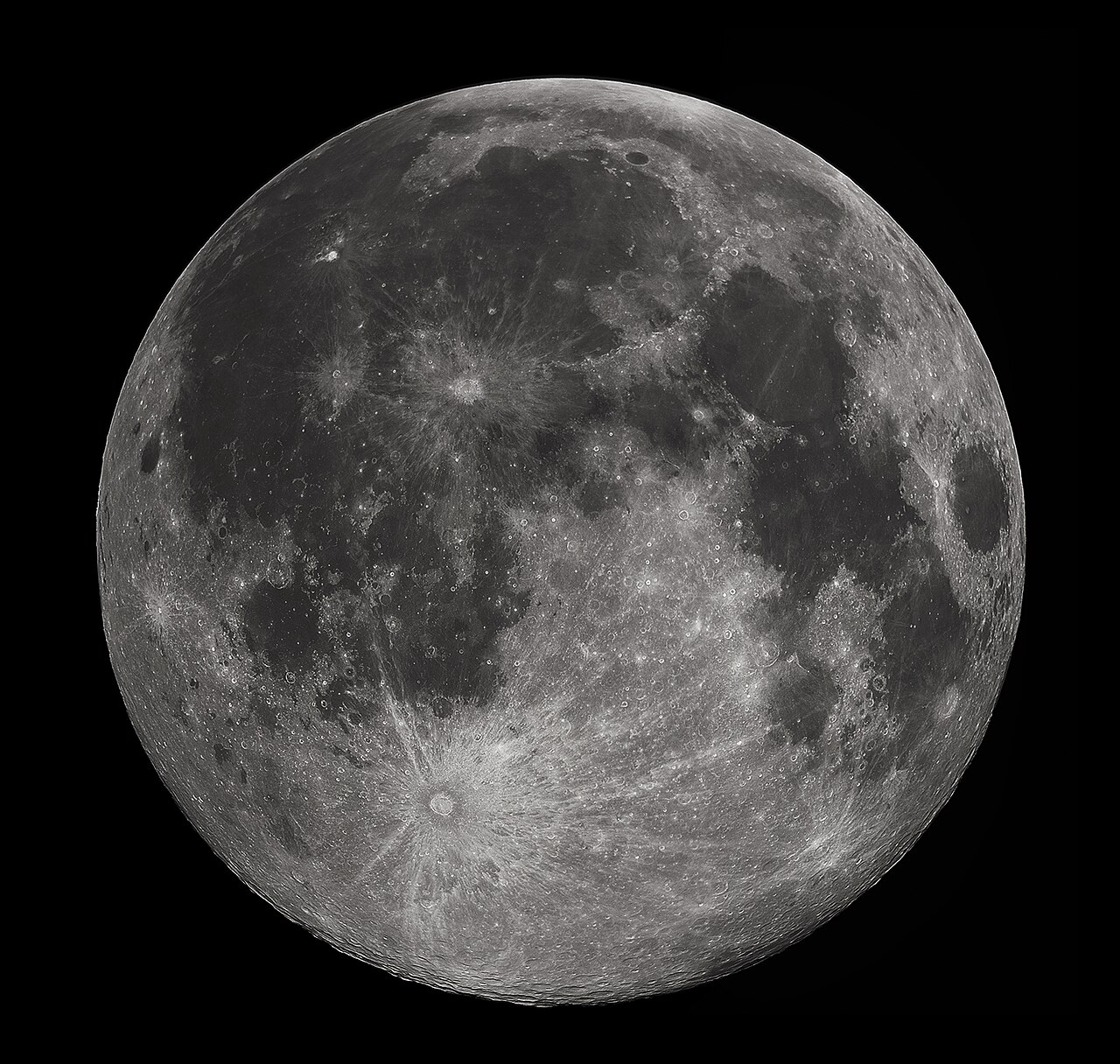
High-res Full Moon — the dark areas are the maria

Lunar Roving Vehicle — Apollo 15, Hadley Rille, 1971

Tycho Crater — Lunar Reconnaissance Orbiter