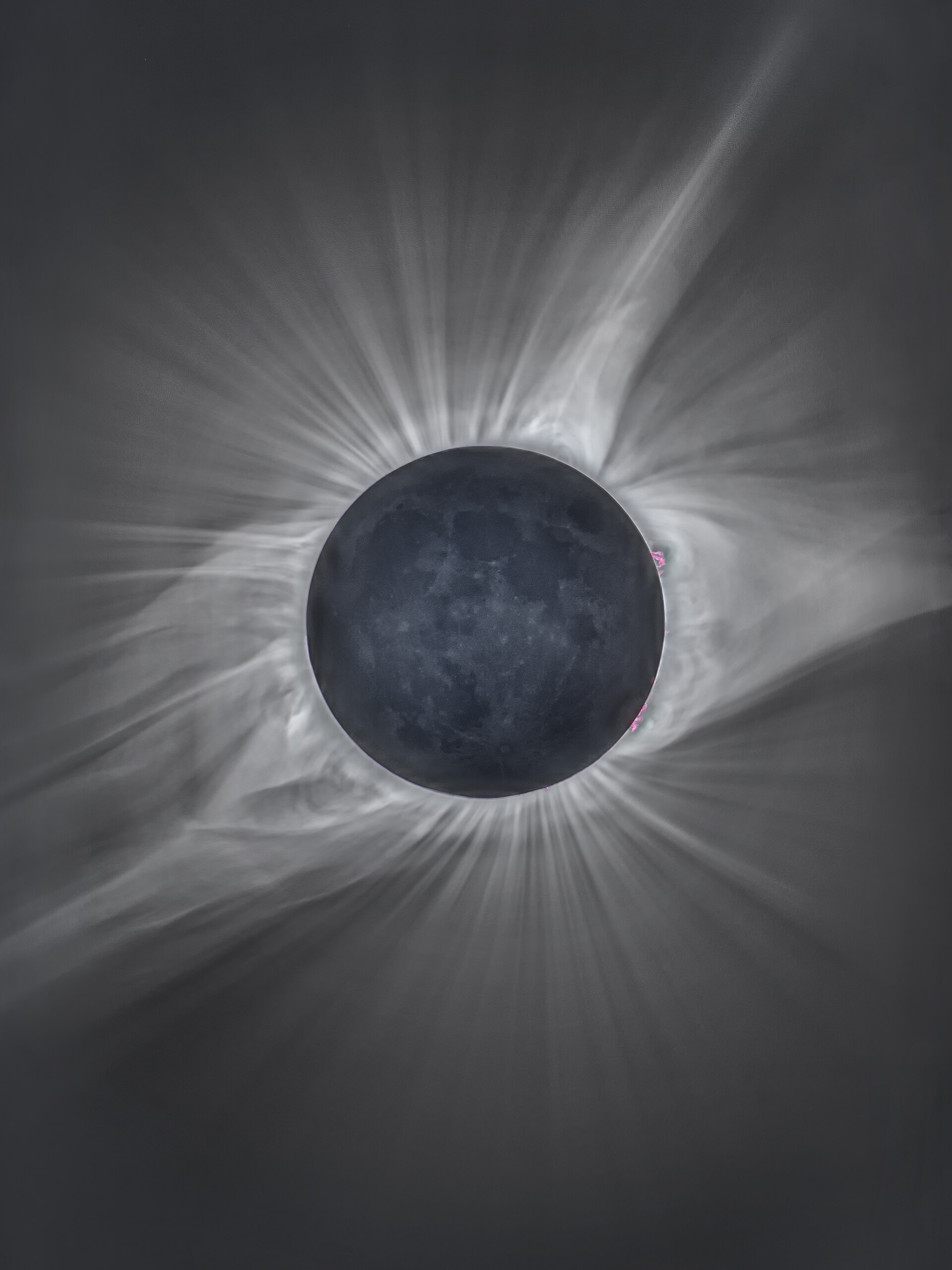
12 August 2026 · 17:46 UTC
Total Solar Eclipse of 12 August 2026
The first total eclipse visible from mainland Europe in 27 years. Totality across Iceland and northern Spain, with a very deep partial eclipse over all of France.
The eclipse is over
Photo: Msadler / Wikimedia Commons — CC BY-SA 4.0
Safety: never look at the Sun unprotected
Even 99% covered, the Sun burns the retina within seconds, entirely painlessly. Use only ISO 12312-2 certified glasses or an indirect projection method. Binoculars, telescopes and telephoto lenses must never be pointed at the Sun without a full-aperture solar filter.
Watch the eclipse live
Cloudy skies or outside the path of totality? Follow the official ESA, NASA and SpaceX streams. Broadcasts start about 30 minutes before first contact.
Where and when to see the eclipse
The Moon's shadow-sm crosses the Arctic, eastern Greenland, western Iceland, then northern Spain just before sunset. Elsewhere in Europe the eclipse is partial.
17:46 UTC
Greatest eclipse
2 min 18 s
Max totality
294 km
Path width
Inside the path of totality
| City | Country | Totality (local time) | Duration |
|---|---|---|---|
| Reykjavík | Iceland | 17:48 | 1 min 03 s |
| Ísafjörður | Iceland | 17:47 | 1 min 55 s |
| A Coruña | Spain | 20:29 | 1 min 18 s |
| Oviedo | Spain | 20:30 | 1 min 41 s |
| Burgos | Spain | 20:31 | 1 min 32 s |
| Zaragoza | Spain | 20:32 | 1 min 26 s |
| Palma de Mallorca | Spain | 20:33 | 1 min 03 s |
In France: partial eclipse
All times are given in French local time (CEST). The Sun will be very low on the west-north-west horizon: pick a hill, a beach or an open rooftop.
| City | Obscuration | Start | Max | End |
|---|---|---|---|---|
| Paris | 92 % | 19:32 | 20:31 | 21:23 |
| Lille | 89 % | 19:33 | 20:31 | 21:22 |
| Strasbourg | 88 % | 19:36 | 20:34 | 21:25 |
| Lyon | 93 % | 19:37 | 20:35 | 21:27 |
| Bordeaux | 96 % | 19:30 | 20:29 | 21:23 |
| Toulouse | 97 % | 19:33 | 20:32 | 21:26 |
| Marseille | 95 % | 19:38 | 20:36 | 21:29 |
| Perpignan | 98 % | 19:35 | 20:34 | 21:28 |
| Nantes | 93 % | 19:30 | 20:29 | 21:21 |
| Brest | 92 % | 19:28 | 20:26 | 21:18 |
Indicative timings, rounded-sm to the minute. In some cities the Sun sets before the eclipse ends.
7 ways to observe the eclipse
One rule only: either a certified filter in front of your eyes, or indirect projection. Nothing else is safe.
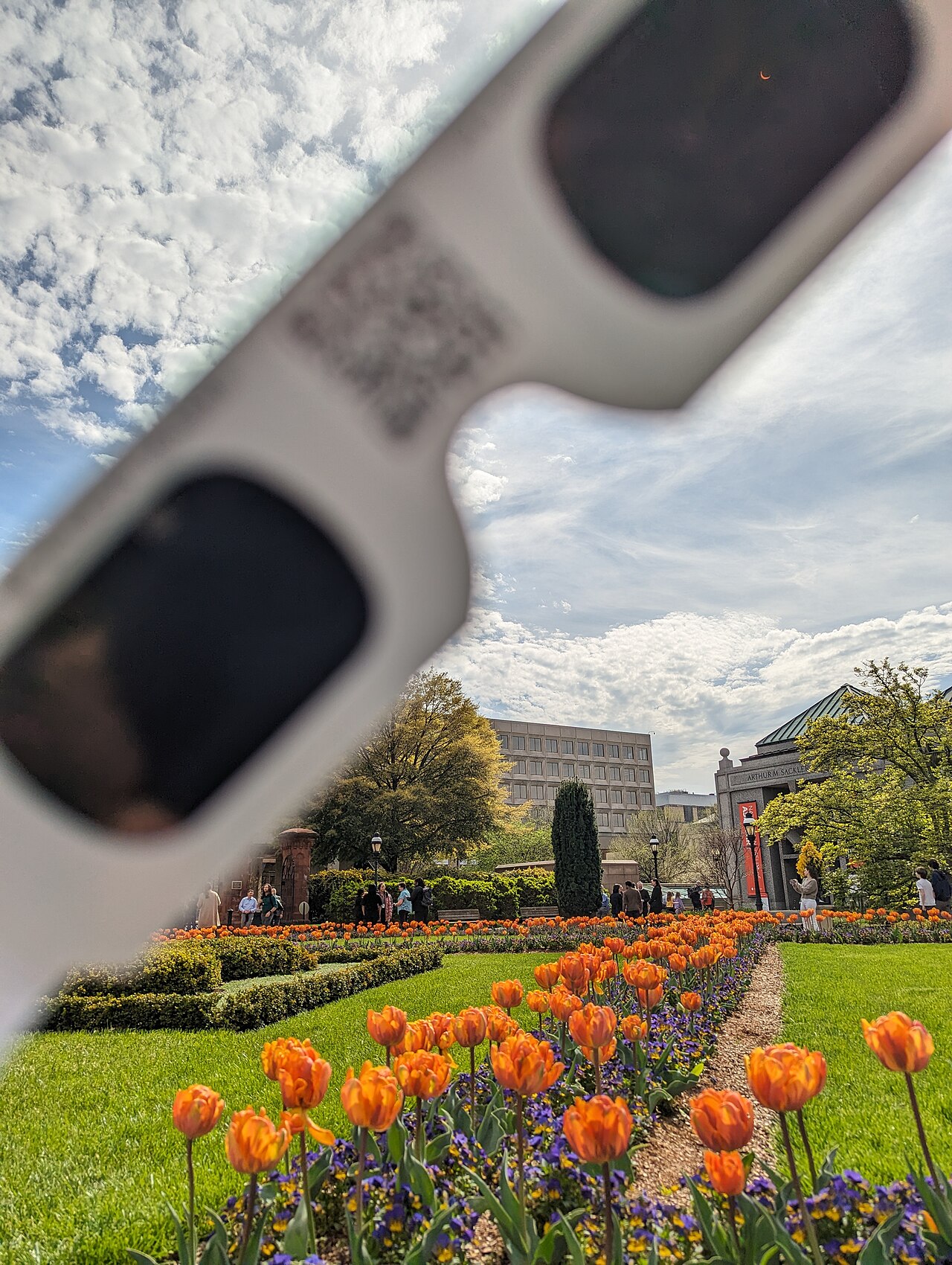
Certified eclipse glasses
Very easyGear: Glasses marked ISO 12312-2 / CE
- Check for the ISO 12312-2 marking and make sure the filter has no scratch, hole or crease.
- Put them on before looking up, and only take them off after looking away.
- Through the filter you should see nothing but the solar disk.
- Never use them with binoculars, a camera or a telescope: concentrated light destroys the filter.
Direct viewing — certified filter mandatory
Pinhole in a piece of cardboard
Easy — 2 minutesGear: 2 pieces of cardboard, a needle or a pin
- Punch a clean 1–2 mm hole in the middle of the first card with a needle.
- Turn your back to the Sun and hold the pierced card above your shoulder.
- Place the second card (or a white sheet) 50 cm to 1 m behind it: the eclipsed Sun is projected on it.
- Move the screen further away for a bigger image, closer for a sharper one.
- Never look at the Sun through the hole.
Indirect viewing — no risk for the eyes
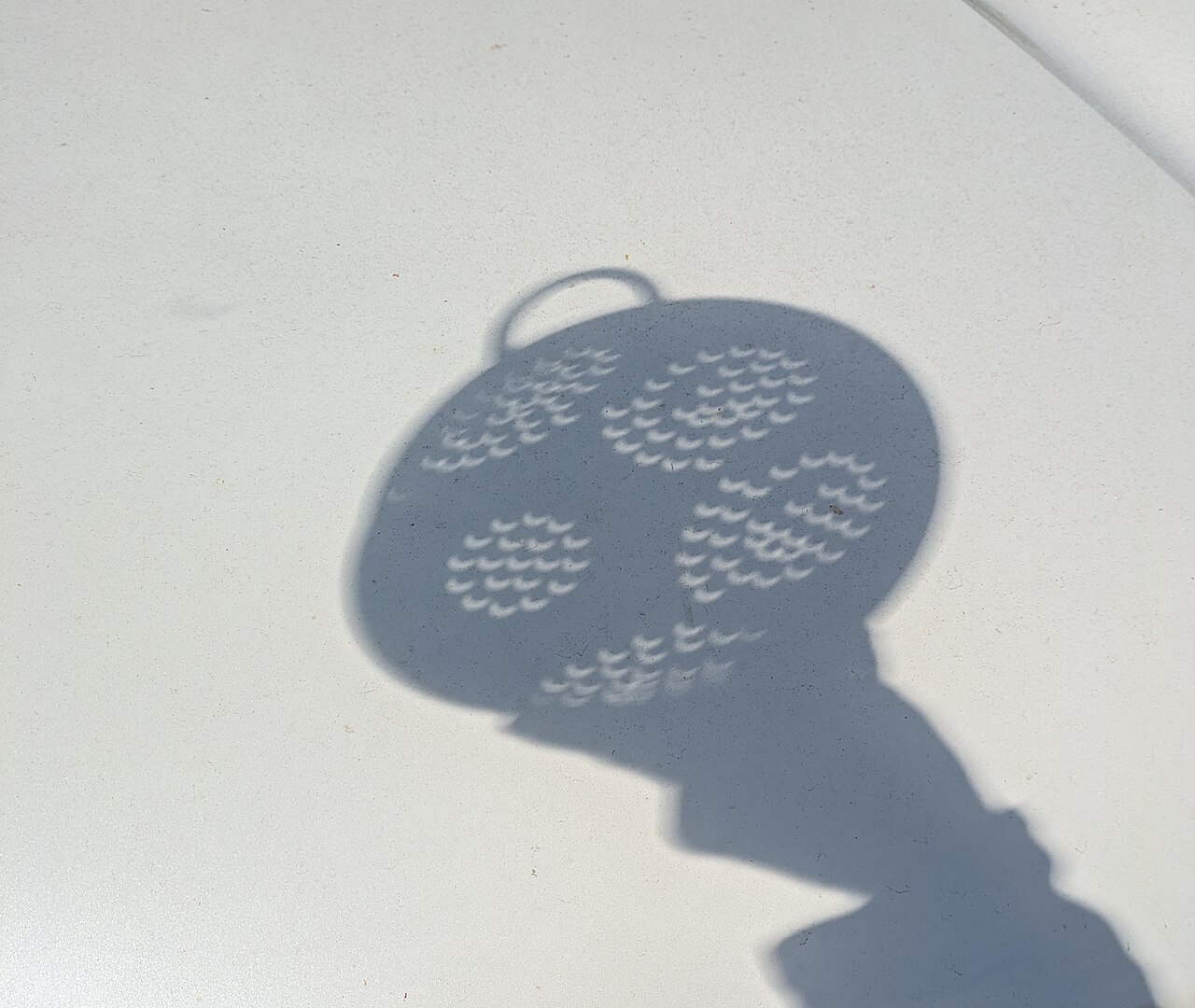
The kitchen colander
Very easyGear: A colander, a white sheet of paper
- Lay a large white sheet on the ground, shaded by your body if possible.
- Hold the colander with your back to the Sun, 30–80 cm above the sheet.
- Each hole acts as a pinhole: dozens of crescents appear.
- Perfect for photographing the eclipse indirectly with a phone.
Indirect viewing — no risk for the eyes
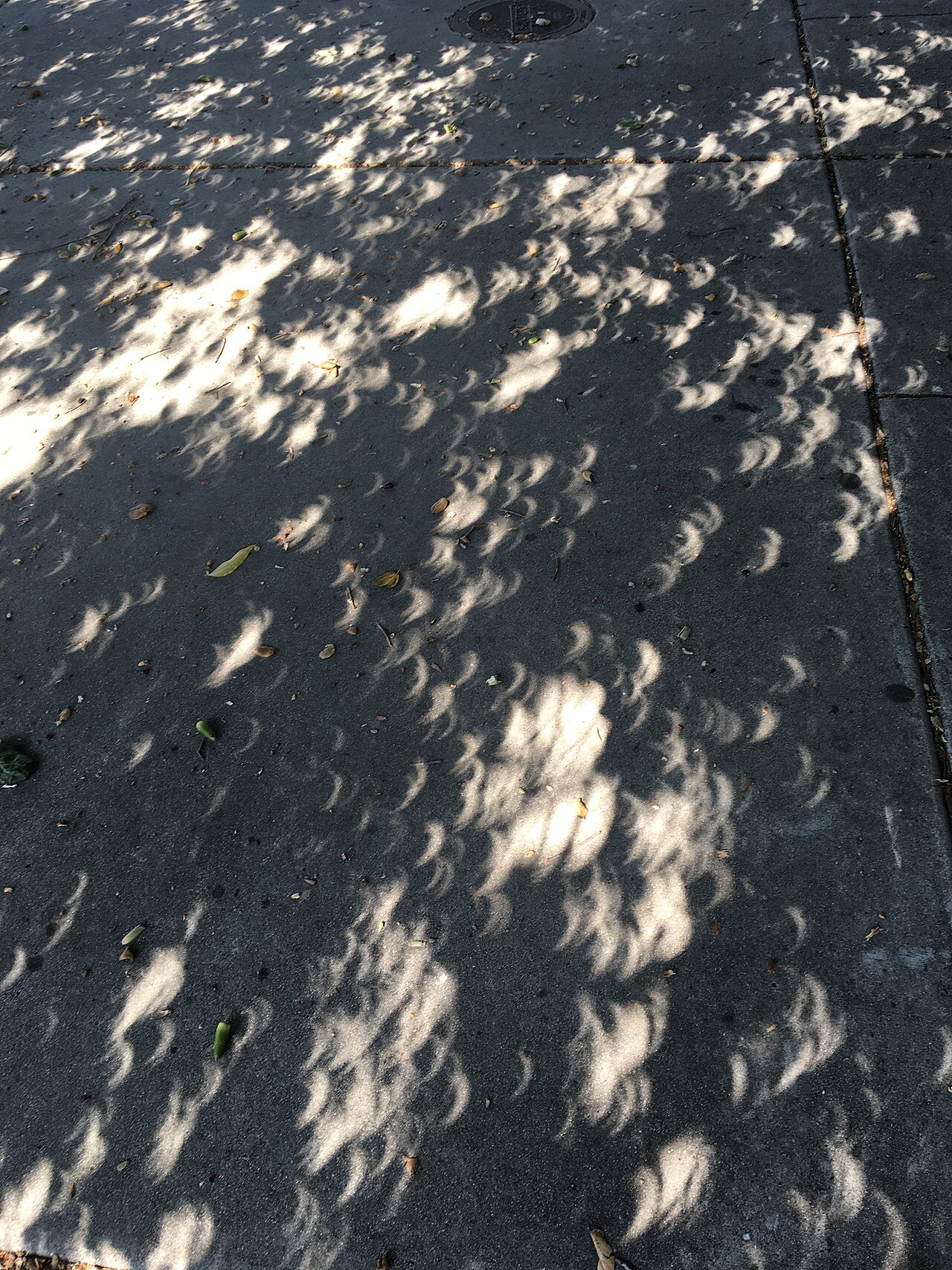
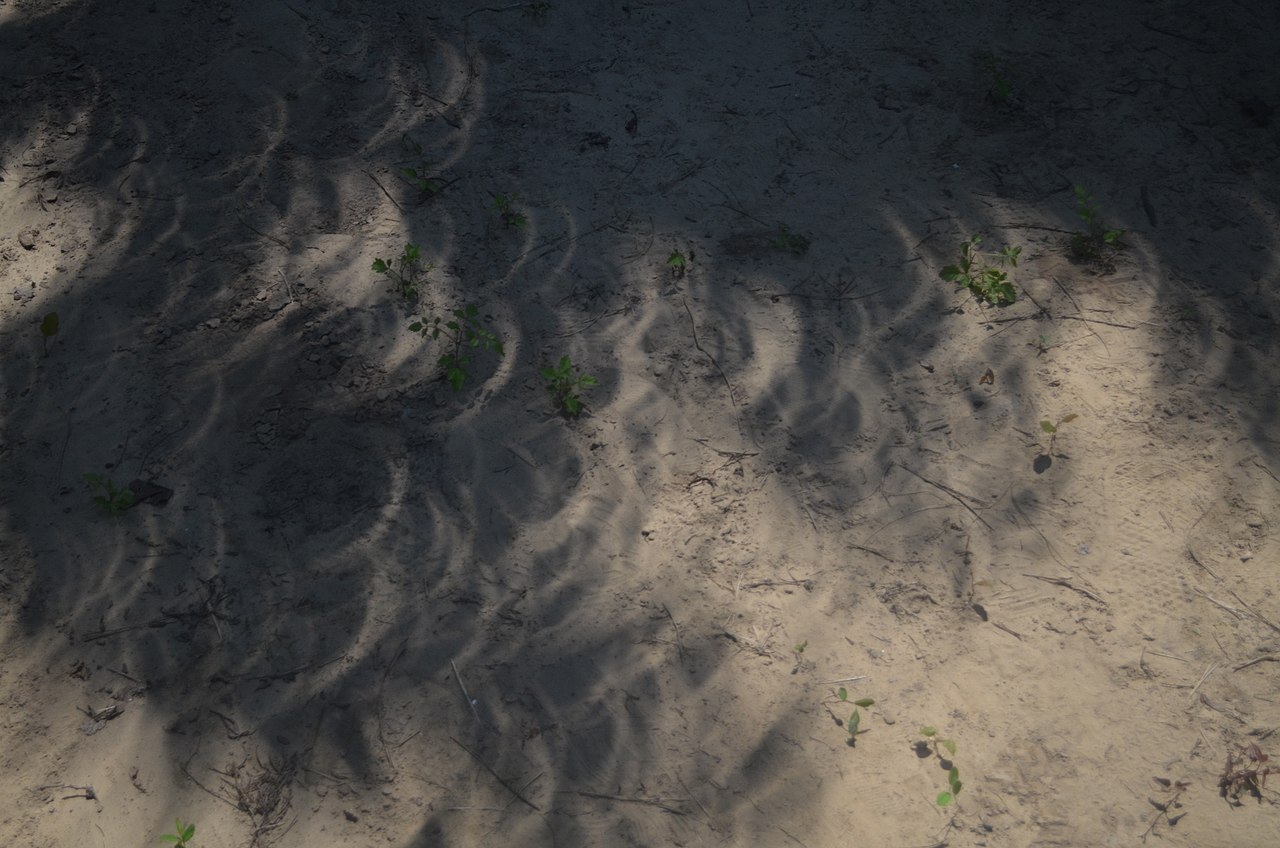
Shadows under a leafy tree
Free and magicalGear: A leafy tree, sunshine
- Stand under a densely leafed tree (plane, lime, chestnut).
- Look at the ground: gaps between the leaves act as thousands of natural pinholes.
- The usual round light spots turn into crescents as the eclipse progresses.
- A light wall or a white sheet on the ground makes the effect far more visible.
Indirect viewing — no risk for the eyes
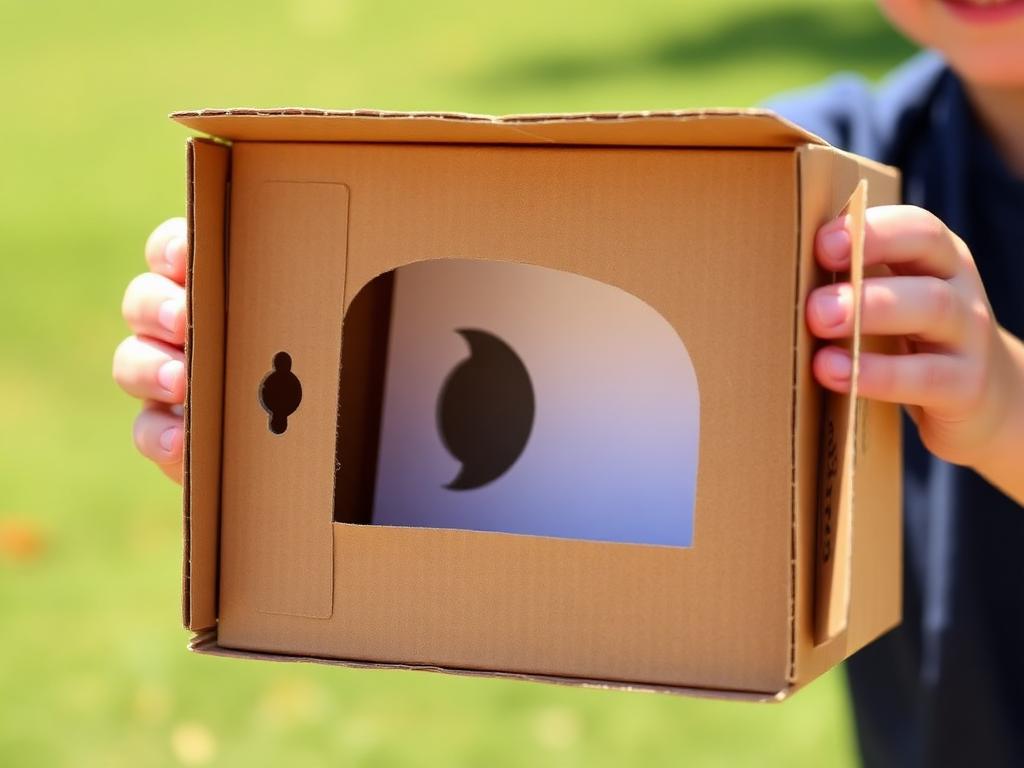
Shoebox pinhole projector
DIY — 15 minutesGear: Shoebox, aluminium foil, needle, white paper, tape
- Tape a white sheet inside the box, against one of the short sides.
- Cut a 1 cm hole in the opposite side and cover it with aluminium foil.
- Prick the foil with a needle: that is your pinhole.
- Cut a viewing window on the long side, near the white screen.
- With your back to the Sun, aim the pinhole at it and look at the projected image through the window.
Indirect viewing — no risk for the eyes
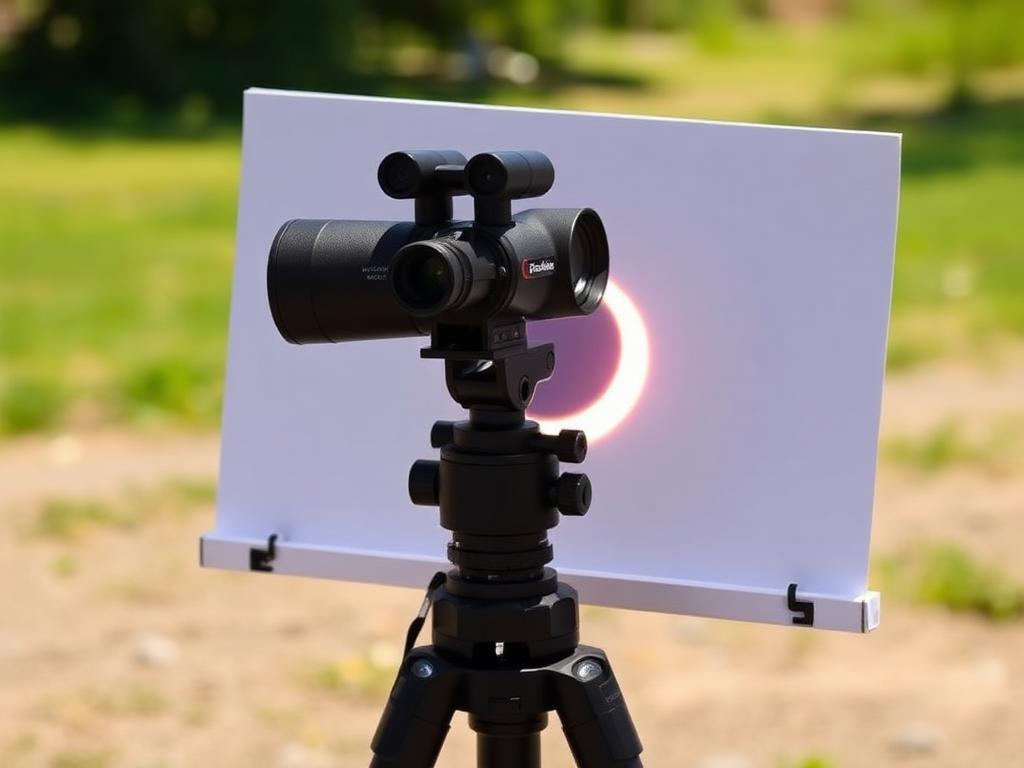
Binocular or telescope projection
IntermediateGear: Binoculars, tripod, white cardboard
- Mount the binoculars on a tripod and cap one of the two objectives.
- Without ever looking through the eyepiece, aim them using the instrument's shadow-sm.
- Hold white cardboard 30–50 cm behind the eyepiece: the Sun appears large on it.
- Focus until sunspots become visible.
- Limit sessions to a few minutes: heat can damage the optics.
Indirect viewing — no risk for the eyes
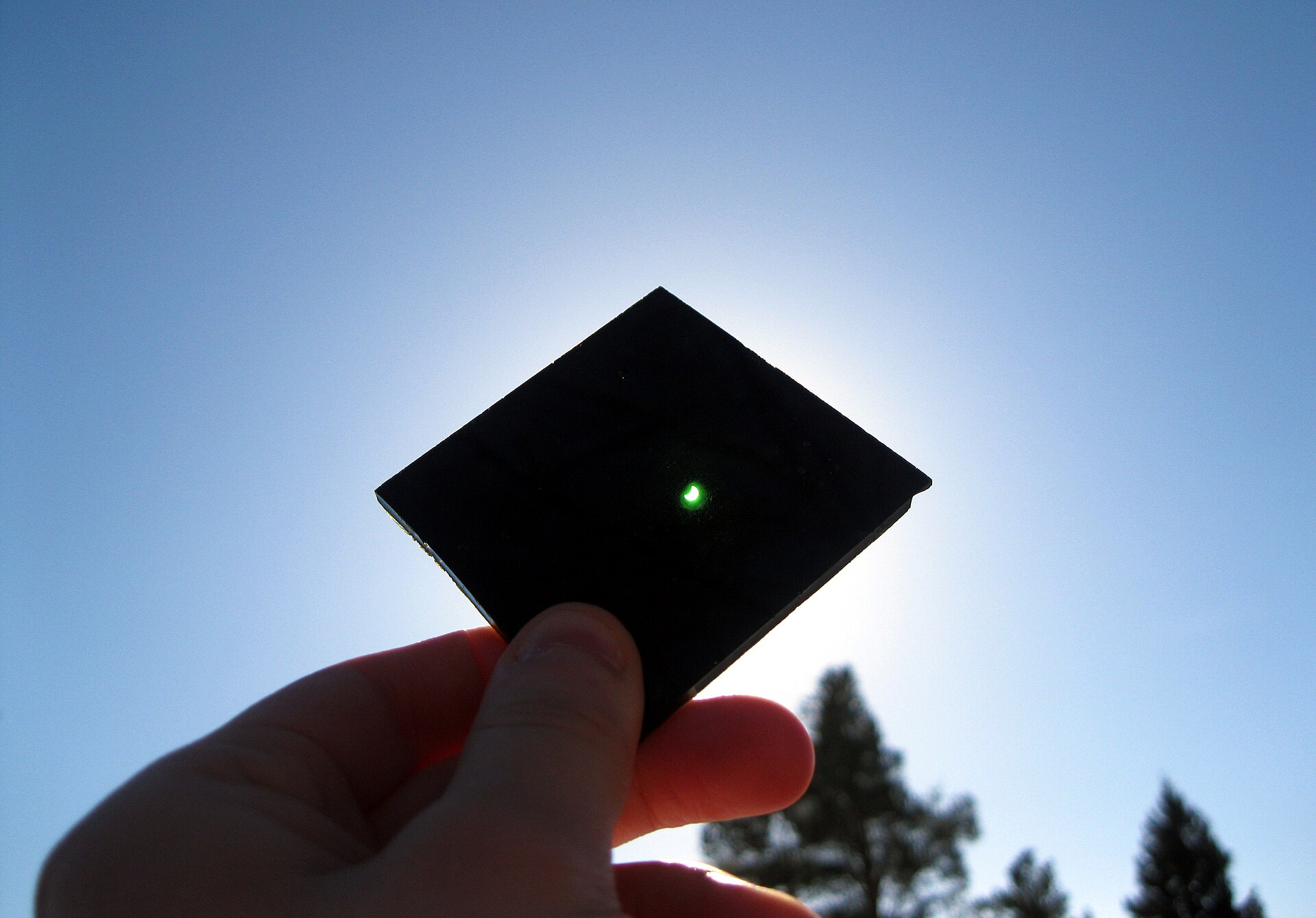
Camera solar filter & shade 14 welder's glass
AdvancedGear: Baader AstroSolar film or full-aperture filter, shade 14 minimum
- The filter ALWAYS goes in front of the lens, never behind the eyepiece.
- Make sure it is firmly attached: a filter falling off mid-observation is an immediate hazard.
- For naked-eye use, only welder's glass shade 14 or darker is acceptable — shade 10 or 12 is not enough.
- Typical photo settings: ISO 100, f/8, 1/1000 s during the partial phase with filter.
- Remove the filter only during totality, and only inside the path of totality.
Direct viewing — certified filter mandatory
Image credits: most photos are real eclipse pictures from Wikimedia Commons (CC0, CC BY and CC BY-SA licences), reused with author attribution. Two visuals (shoebox, binocular projection) are AI-generated illustrations: they are schematics, not photographs.
Video tutorials to build your own viewer
Four YouTube selections to build a projector in minutes with household materials.
Build a pinhole projector (NASA)
The official NASA tutorial: cardboard box, foil and a needle.
Shoebox projector step by step
Full 15-minute build using household materials.
Safe binocular projection
How to aim and focus binoculars without ever looking through them.
Photographing the eclipse with a smartphone
Filters, settings and framing tips without damaging the sensor.
Frequently asked questions
- Can I watch the eclipse with sunglasses?
- No. Even stacked, sunglasses let through thousands of times too much visible and infrared light. Only ISO 12312-2 certified filters protect the retina.
- What about a CD, an X-ray film or exposed photo film?
- No. These materials dim visible light but let infrared through, which burns the retina painlessly: the damage can be permanent and may only show up hours later.
- How do I check my eclipse glasses?
- Look for the ISO 12312-2 marking and CE label, and check for scratches, holes or creases. Indoors, looking at a very bright bulb, you should barely see a faint halo. When in doubt, throw them away.
- When can the glasses be removed?
- Only during totality, when the solar disk is fully covered — so only if you are inside the path of totality. Put them back on at the first glimpse of returning sunlight.
- Can I photograph the eclipse with a phone?
- Yes, but put a solar filter or an eclipse-glasses lens in front of the camera during partial phases, and don't look at the Sun with the naked eye to frame. Projections (colander, tree shadows) often make better pictures.
- What will be visible from France?
- A very deep partial eclipse in the late afternoon: about 92% of the Sun covered in Paris, 96% in Bordeaux, 98% in Perpignan. The Sun will be low on the western horizon: find an unobstructed viewpoint.
- When is the next total eclipse visible from Europe?
- On 2 August 2027, with a path of totality crossing southern Spain, North Africa and Egypt, and an exceptional totality lasting over 6 minutes.
- What if the sky is cloudy?
- Follow the live broadcasts from ESA, NASA or observatories in Iceland and Spain. Even under clouds, the sharp drop in brightness and temperature is still noticeable.
Keep exploring
The Moon hiding the Sun today is also humanity's next destination.